Mohiniyattam Training

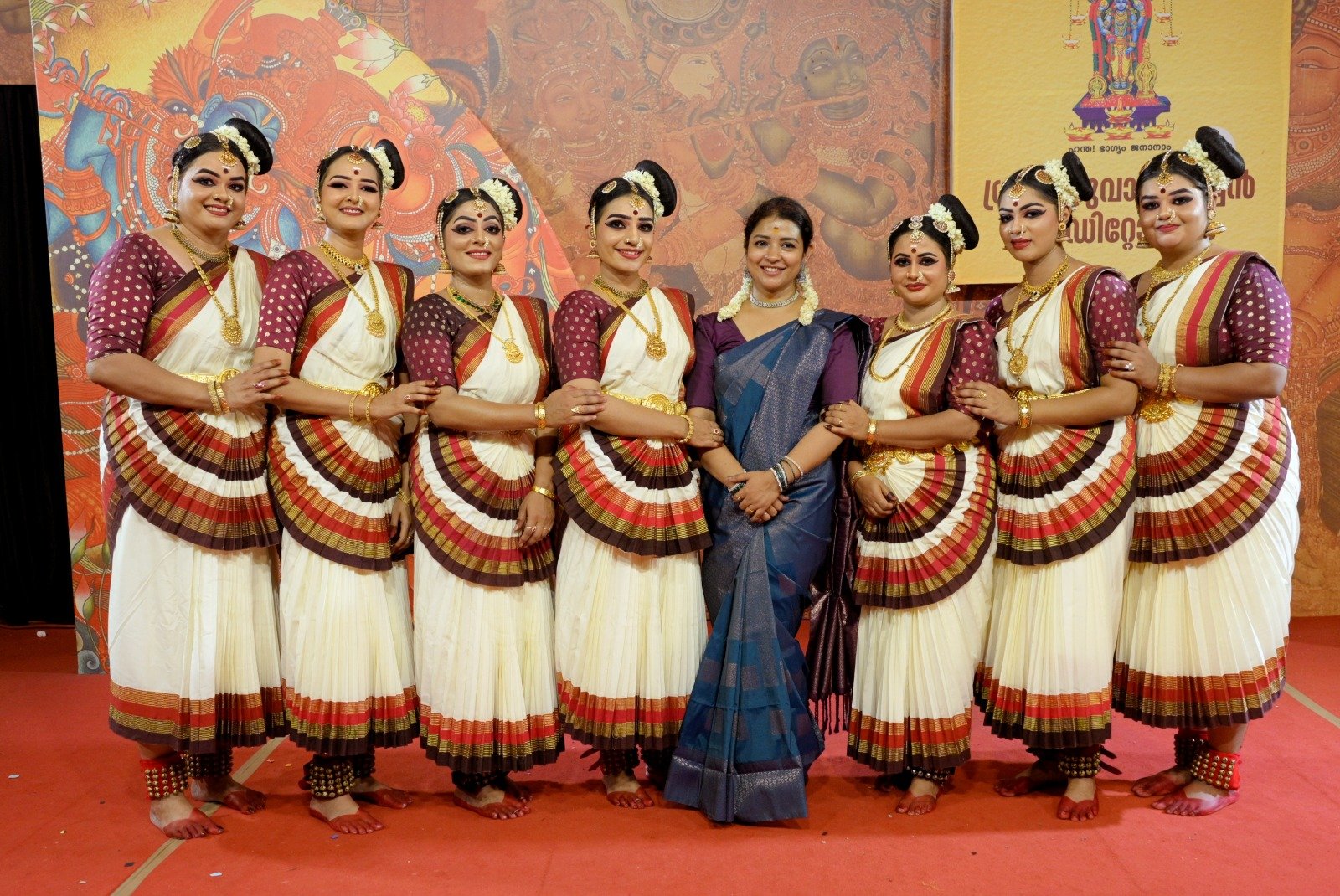
Training follows the Kalyanikutty Amma style of Mohiniyattam, with a strong focus on technique, structure, and expressive depth. Our training also embraces the Sopana tradition, enriching the dancer’s sense of rhythm, abhinaya, and spiritual expression.

Foundational & Technique-Oriented Modules

  • Adavus – Foundational steps and body alignment
  • Hastas – Soft hand gestures and classical mudras
  • Abhinaya – Lasya-oriented expressions and emotive storytelling
  • Rasa Bhava – Cultivating emotional depth and subtle expression

Dance Items (Repertoire)

  • Cholkettu
  • Jatiswaram
  • Varnam
  • Padam
  • Shlokam
  • Saptam

Bharatanatyam Training

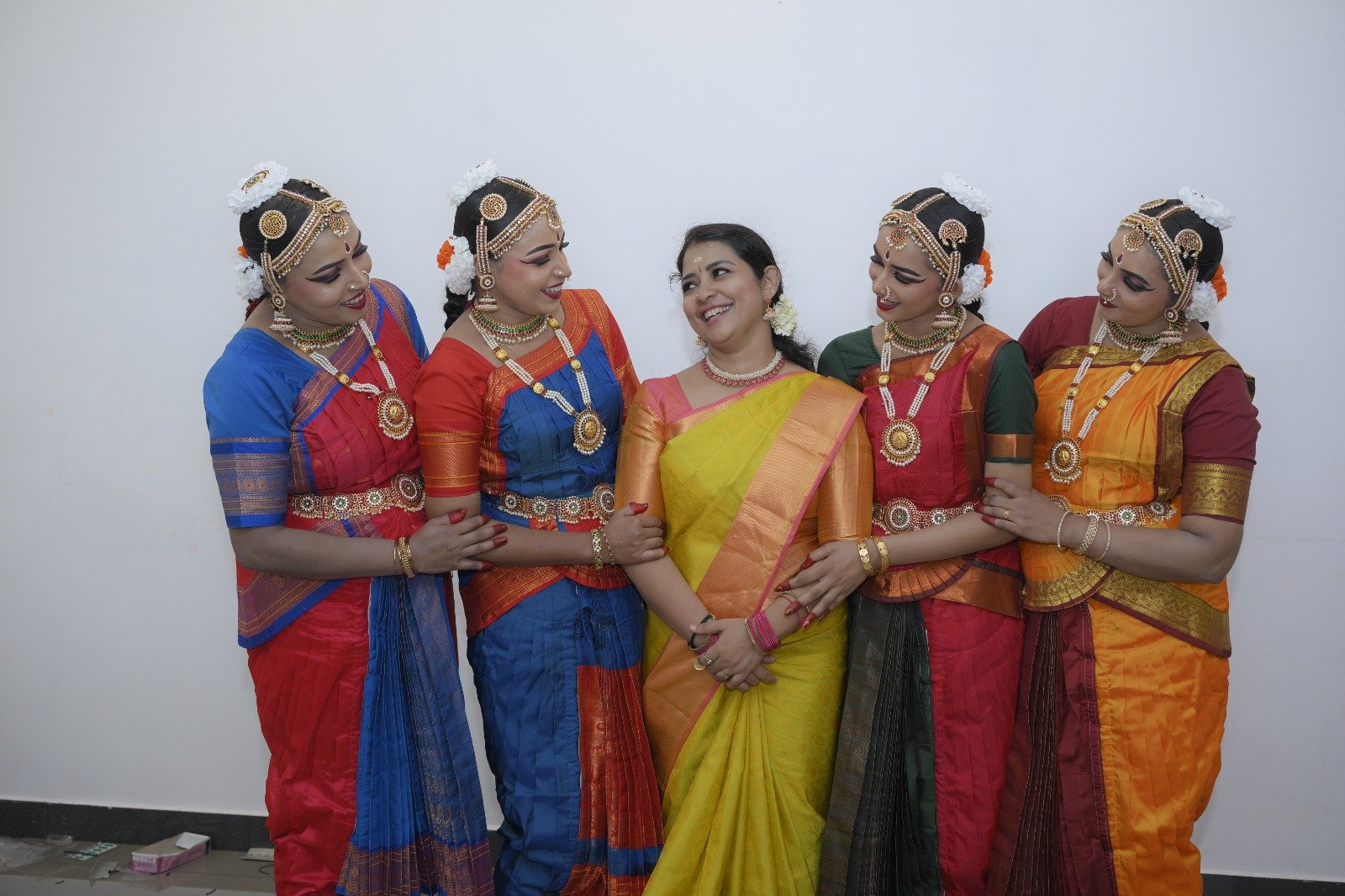
Bharatanatyam at Sree Dakshina Mookambika Dance Academy is taught as a holistic classical system that unites body, mind, rhythm, emotion, and devotion. The training follows a traditional guru–shishya approach, ensuring that students not only learn movements but also understand the philosophy, discipline, and cultural depth behind the art form.

Strong Foundations in Technique

Training begins with a strong technical base, where students are carefully guided through:

  • Adavus – Systematic foundational steps focusing on araimandi, posture, balance, coordination, and rhythmic accuracy
  • Body Conditioning – Exercises to build stamina, flexibility, strength, and control essential for Bharatanatyam
  • Movement Precision – Emphasis on clean lines, clarity of footwork, and synchronized upper and lower body movements

Great importance is given to correct alignment and gradual progression, allowing students to develop confidence without strain.

Classical Repertoire Training

As students advance, they are introduced to the structured Bharatanatyam repertoire, taught with attention to authenticity and artistic integrity:
  • Alarippu
  • Jatiswaram
  • Shabdam
  • Varnam
  • Padam
  • Keerthanam
  • Tillana

Nattuvangam Training

This syllabus is designed to provide systematic training in Nattuvangam and Tala from the basic level. It shall be followed as the prescribed curriculum and is suitable for both beginners and professionals seeking structured and advanced reinforcement of rhythmic concepts.

Syllabus: Nattuvangam and Tala (Basic Level)

Unit 1: Introduction to Carnatic Tala System

  • Introduction to the Carnatic Tala system
  • Tala Dasa Pranas

Unit 2: Talas in Carnatic Music

  • The three basic Angas
  • Finding Aksharakala in a Tala
  • Matra in a Tala
  • Chappu Tala
  • Matra calculation of Chappu Tala

Unit 3: Nattuvangam and Tala Practice

  • Sapta Tala practice
  • Basic exercises in Nattuvangam
  • Panchanada in Nattuvangam
  • Panchanada practice in three speeds

Unit 4: Panchajati Thathikinathom and Korvai Making

  • Matra structure of Panchajati Thathikinathom
  • Panchajati Thathikinathom – structure and usage in Korvai making
  • Applying Thathikinathom to a Tala

Unit 5: Korvai in Sama and Vishama Grahas

  • Concept of Korvai
  • Method of setting a Korvai
  • Karva (pause) in Korvai
  • Korvai and Jati in Vishama Graha

Unit 6: Panchanada Making

  • Construction and application of Panchanada patterns

Unit 7: Varieties of “Dhi Thi Thai” Playing in Nattuvangam

  • Dhithithai
  • Thai-Dhithithai
  • Thai-Thai-Dhithithai
  • Thai-Thai-Thai-Dhithithai
  • Termanam Adavu
  • Kitatakatarikitathom

Unit 8: Yati Practice in Nattuvangam

  • Sama Yati
  • Gopuchha Yati
  • Srotovaha Yati
  • Mridanga Yati